

Feeling as though the room is spinning, losing your balance when walking, or becoming dizzy when you turn your head can be unsettling. Vertigo can interfere with everyday activities such as getting out of bed, driving, exercising, working, or simply walking around your home.
While vertigo has many possible causes, physiotherapy for vertigo can be an important part of treatment for certain vestibular and balance-related conditions.
A specialized approach called vestibular rehabilitation uses assessment, targeted exercises, balance training, and other techniques based on the individual’s symptoms and underlying condition. However, because dizziness and vertigo can have different causes, getting the right assessment is an important first step.
What Is Vertigo?

Vertigo is a specific sensation that you or your surroundings are moving, spinning, tilting, or shifting even when you are actually still. It is different from simply feeling lightheaded or faint.
Vertigo may occur with symptoms such as:
- Spinning or rotational sensations
- Nausea
- Difficulty maintaining balance
- Unsteadiness when walking
- Sensitivity to movement
- Difficulty focusing your vision
- Dizziness when changing head position
- Feeling uncomfortable in busy visual environments
Vertigo is a symptom rather than a single disease. It can be associated with conditions affecting the inner ear, vestibular system, nervous system, or other parts of the body.
That is why treatment should be based on the individual’s symptoms and assessment rather than simply performing the same exercises for everyone.
What Causes Vertigo?
One of the most common causes of vertigo is benign paroxysmal positional vertigo (BPPV).
BPPV occurs when tiny calcium carbonate crystals in the inner ear become displaced and interfere with the normal signals used to detect head movement. This can cause short episodes of spinning when changing head position, such as rolling over in bed, lying down, sitting up, or looking upward.
Other causes of dizziness or vertigo can include vestibular neuritis, labyrinthitis, migraine-related conditions, concussion, neurological conditions, and other disorders affecting balance.
Because the appropriate treatment varies according to the cause, a proper assessment is important before starting a vestibular rehabilitation program.
How Can Physiotherapy Help With Vertigo?
Vestibular physiotherapy focuses on the relationship between your inner-ear balance system, eyes, brain, and movement.
After an assessment, a physiotherapist may use different strategies depending on your symptoms and diagnosis.
Treatment may include:
Canalith Repositioning for BPPV
When BPPV is identified, specific repositioning maneuvers may be used to move displaced particles within the inner ear.
The Epley maneuver is one example of a canalith repositioning procedure commonly used for certain forms of BPPV.
The correct maneuver depends on the affected canal and side, which is another reason why self-treatment without knowing the underlying cause isn’t always appropriate.
Gaze Stabilization Exercises
Some people with vestibular problems have difficulty keeping their vision clear while moving their head.
Gaze stabilization exercises can be prescribed to help the visual and vestibular systems work together more effectively during movement.
Your physiotherapist determines which exercises are appropriate and how they should be progressed.
Balance Training
Vertigo and vestibular disorders can affect balance and confidence when standing or walking.
A physiotherapy program may therefore include balance exercises that gradually challenge your ability to maintain stability under controlled conditions.
The exercises can be progressed according to your ability and safety.
Habituation and Movement Exercises
Some people become particularly sensitive to specific movements or visual environments.
Under appropriate professional guidance, habituation exercises may gradually expose a person to movements that trigger symptoms, with the goal of helping the nervous system adapt over time.
The type and intensity of exercise should be individualised rather than copied from a generic online routine.
Can Physiotherapy Treat BPPV?
Physiotherapy can be highly relevant for people with BPPV when the condition is correctly identified.
Unlike a general strengthening program, BPPV treatment often involves specific positional assessment and canalith repositioning techniques.
Research-based medical resources identify physical therapy and repositioning procedures as treatment options for appropriate cases of BPPV.
However, not every episode of dizziness is BPPV.
If your symptoms don’t match BPPV or if there are other concerning symptoms, your healthcare provider may recommend additional medical assessment.
Physiotherapy for Vertigo After a Concussion
Dizziness and balance problems can also occur following a concussion or head injury.
Some people may experience:
- Dizziness
- Motion sensitivity
- Balance difficulties
- Headaches
- Visual symptoms
- Nausea
- Difficulty tolerating busy environments
Vestibular rehabilitation may form part of a broader concussion rehabilitation program when clinically appropriate.
Pro Function specifically offers Concussion & Vestibular Rehabilitation, and its team includes physiotherapist Jon McIntosh, who has a vestibular and concussion focus and treats conditions including vertigo, dizziness and nausea.
What Happens During a Vestibular Physiotherapy Assessment?
Your assessment should begin with understanding your symptoms rather than immediately performing exercises.
Your physiotherapist may ask about:
- When the dizziness started
- How long episodes last
- What triggers your symptoms
- Whether head movements make symptoms worse
- Previous injuries or concussion
- Balance difficulties
- Nausea or visual symptoms
- Your medical history
- How dizziness affects work and daily activities
Depending on your presentation, the physical assessment may include balance testing, eye and head movement assessment, positional testing, and evaluation of how your symptoms respond to different movements.
The findings help determine whether vestibular physiotherapy is appropriate and what treatment approach may be suitable.
Should You Do Vertigo Exercises at Home?
You may find exercises for vertigo online, but that doesn’t mean every exercise is appropriate for every type of dizziness.
For example, the Epley maneuver may be appropriate for certain cases of BPPV but isn’t a universal treatment for all causes of vertigo. Medical guidance recommends determining the underlying cause and receiving appropriate professional guidance before starting a treatment program.
A physiotherapist can show you which exercises are appropriate, how often to perform them, and how to progress them safely.
When Should You See a Physiotherapist for Vertigo?
Consider seeking a professional assessment if you experience:
- Recurring episodes of vertigo
- Dizziness triggered by head movements
- Balance difficulties
- Unsteadiness while walking
- Dizziness after a concussion
- Persistent motion sensitivity
- Difficulty returning to normal activities because of dizziness
- Symptoms that interfere with exercise, work, or daily life
You should not assume that every episode of dizziness is something that can be treated with physiotherapy.
When Is Medical Assessment More Important?
Vertigo can occasionally occur alongside serious medical conditions.
Seek urgent medical attention if dizziness or vertigo occurs with concerning symptoms such as sudden weakness, difficulty speaking, significant loss of coordination, severe neurological symptoms, chest pain, fainting, or other signs of a medical emergency.
A physiotherapist can be an important part of rehabilitation, but they should not replace appropriate medical assessment when symptoms require urgent investigation.
Why Choose Pro Function for Physiotherapy for Vertigo?
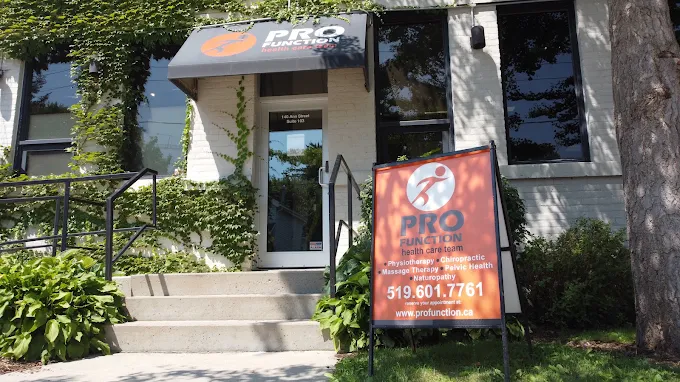
If you’re looking for physiotherapy for vertigo in London, Ontario, Pro Function Health Care Team offers specialized Concussion & Vestibular Rehabilitation as part of its multidisciplinary healthcare services.
Pro Function’s team includes physiotherapists with specific vestibular and concussion experience. Jon McIntosh, PT, MPT, is listed as an orthopaedic physiotherapist with a vestibular and concussion focus and specifically treats vertigo, dizziness, and nausea.
Pro Function also takes an integrated approach to healthcare, with physiotherapists, chiropractors, massage therapists, naturopathic care and podiatric services available within its broader team.
If dizziness or vertigo is affecting your balance, confidence, exercise, work, or daily activities, a professional assessment can help determine what may be contributing to your symptoms and whether vestibular rehabilitation is appropriate.
Ready to take the next step? Book an appointment with the Pro Function Health Care Team in London, Ontario, to discuss your vertigo, dizziness, or balance concerns with a qualified healthcare professional.
Frequently Asked Questions About Physiotherapy for Vertigo
Yes, physiotherapy can help with certain causes of vertigo and dizziness. Vestibular rehabilitation may use balance exercises, gaze stabilization, habituation exercises, and specific repositioning maneuvers depending on the underlying condition.
For appropriately diagnosed BPPV, canalith repositioning maneuvers are commonly used to address the displaced inner-ear particles responsible for symptoms. A trained healthcare professional can determine whether BPPV is present and which maneuver is appropriate.
Vestibular rehabilitation can be part of rehabilitation for people experiencing dizziness and balance problems following concussion, depending on the individual’s symptoms and clinical assessment. Pro Function specifically offers concussion and vestibular rehabilitation.
It’s better to determine the cause and affected side before attempting a repositioning maneuver. Vertigo has multiple possible causes, and an exercise appropriate for one condition may not be appropriate for another.
Look for a physiotherapy clinic with specific experience in vestibular rehabilitation and dizziness. Pro Function provides concussion and vestibular rehabilitation in London, Ontario,o and has clinicians with vestibular expertise.