
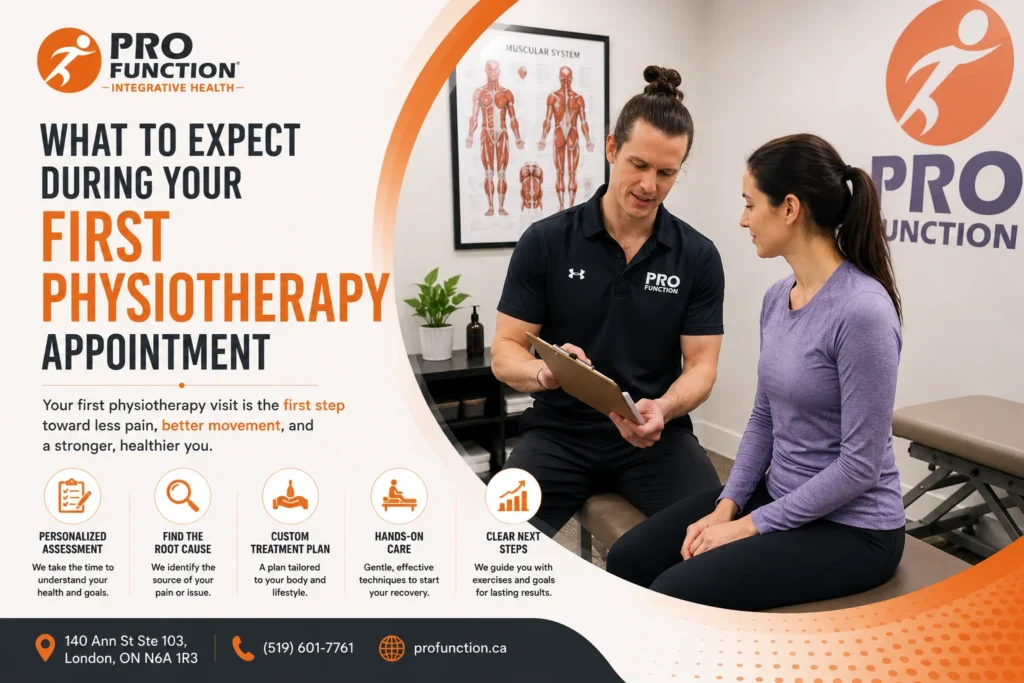
If you’ve never visited a physiotherapy clinic before, it’s natural to have questions about what your first appointment will involve. You may be wondering how long the visit will take, what the physiotherapist will examine, whether you’ll receive treatment on the same day, or how you should prepare.
Your first physiotherapy appointment is an important step toward understanding the cause of your pain or mobility issues. Rather than simply focusing on your symptoms, a physiotherapist performs a comprehensive assessment to identify the underlying problem and develop a personalized treatment plan that supports long-term recovery.
Whether you’re recovering from a sports injury, experiencing back or neck pain, preparing for surgery, or managing a chronic condition, knowing what to expect during your first physiotherapy appointment can help you feel more confident and prepared.

Why Your First Physiotherapy Appointment Is Important
Every injury and every patient is different. That’s why physiotherapy begins with a detailed assessment instead of using the same treatment for everyone.
Your initial physiotherapy assessment allows your physiotherapist to:
- Understand your symptoms and medical history
- Identify the cause of your pain or movement limitations
- Assess your posture, strength, and mobility
- Evaluate how your condition affects daily activities
- Create a treatment plan based on your goals
This information helps ensure your rehabilitation program is safe, effective, and tailored to your specific needs.
How to Prepare for Your First Physiotherapy Appointment
Preparing ahead of time can make your visit smoother and help your physiotherapist perform a more accurate assessment.
Wear Comfortable Clothing
Choose loose-fitting clothing that allows easy movement. If you’re being treated for a knee, hip, or ankle condition, shorts are often recommended. For shoulder or neck problems, a sleeveless or loose-fitting shirt can make the examination easier.
Comfortable athletic shoes are also a good choice if your physiotherapist needs to assess your walking pattern or movement.
Bring Relevant Medical Information
If available, bring any documents related to your condition, such as:
- Medical referral (if required)
- X-rays or MRI reports
- Ultrasound results
- Medication list
- Previous treatment records
- Extended health insurance information
Having these documents available helps your physiotherapist better understand your condition and previous care.
Think About Your Symptoms
Before your appointment, consider:
- When did your pain begin?
- What activities make it worse?
- What helps reduce your symptoms?
- Have you experienced similar pain before?
- What are your recovery goals?
Providing clear answers helps your physiotherapist create a more personalized treatment plan.
What Happens During Your First Physiotherapy Appointment?
Many people assume they’ll simply receive a few exercises before going home. In reality, your initial physiotherapy assessment is much more comprehensive.
Here’s what typically happens during your first visit.
1. Discussion About Your Health History
Your appointment usually begins with a conversation about your health and current concerns.
Your physiotherapist may ask questions about:
- Your symptoms
- Pain location
- Previous injuries
- Medical conditions
- Lifestyle
- Occupation
- Physical activity level
- Daily challenges
- Recovery goals
These questions help identify factors that may be contributing to your condition.
2. Pain Assessment
Understanding your pain is an important part of the assessment.
Your physiotherapist may ask:
- Where do you feel pain?
- When did it start?
- Is the pain sharp, dull, burning, or aching?
- Does it spread to other areas?
- What movements increase or reduce your pain?
This information provides valuable clues about the underlying cause of your symptoms.
3. Physical Examination
The next step is a physical examination to evaluate how your body moves.
Depending on your condition, your physiotherapist may assess:
- Posture
- Walking pattern
- Balance
- Joint mobility
- Muscle flexibility
- Muscle strength
- Range of motion
- Functional movements
- Swelling or inflammation
For example, if you’re experiencing shoulder pain, your physiotherapist may observe how you lift your arm or perform overhead movements. If you have knee pain, they may assess how you walk, squat, or climb steps.
4. Movement Assessment
A movement assessment helps identify restrictions, muscle imbalances, or abnormal movement patterns that may be causing pain.
You may be asked to perform movements such as:
- Walking
- Sitting and standing
- Squatting
- Bending
- Reaching
- Climbing stairs
- Balancing on one leg
Observing these movements allows your physiotherapist to understand how your body functions during everyday activities.
5. Diagnosis and Explanation
Once the assessment is complete, your physiotherapist will explain their findings in clear, easy-to-understand language.
You’ll learn:
- What is causing your pain
- Why your symptoms developed
- Which muscles or joints are affected
- What factors may be slowing your recovery
- What improvements you can expect
This discussion gives you a better understanding of your condition and helps you take an active role in your recovery.
Your Personalized Physiotherapy Treatment Plan
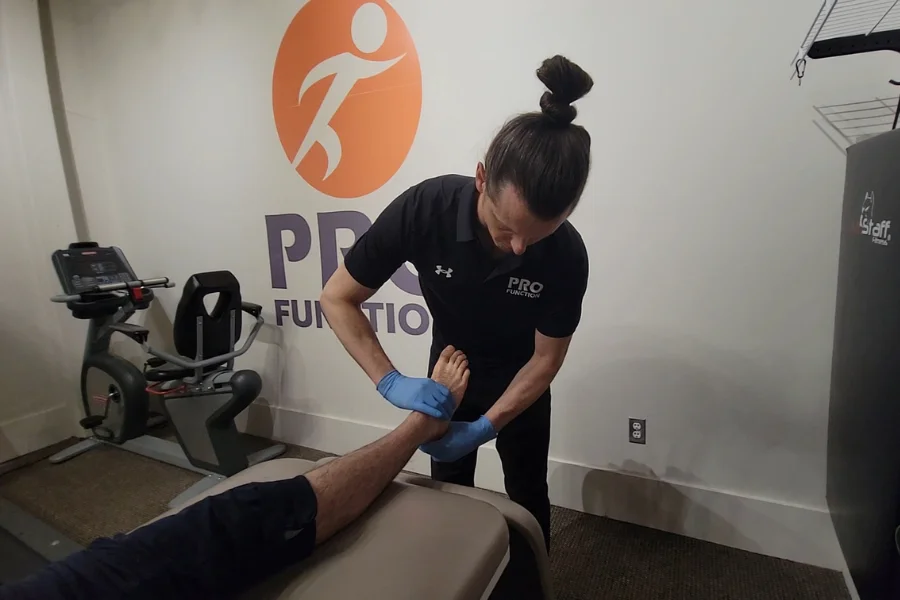
No two patients recover in the same way. After completing your assessment, your physiotherapist will create a treatment plan tailored to your needs, lifestyle, and goals.
Your plan may include:
- Manual therapy
- Therapeutic exercises
- Stretching routines
- Strengthening exercises
- Balance training
- Posture correction
- Mobility exercises
- Home exercise program
- Education on injury prevention
Your physiotherapist will also discuss how often you may need treatment and what you can do at home to support your recovery.
Will You Receive Treatment During Your First Visit?
In many cases, yes.
If time allows and it’s appropriate for your condition, your physiotherapist may begin treatment during your first appointment. This can help reduce pain, improve mobility, and start your recovery as soon as possible.
Your initial treatment may include:
- Gentle manual therapy
- Guided stretching
- Mobility exercises
- Pain management techniques
- Education about posture and movement
- A personalized home exercise program
Starting treatment early often helps patients feel more confident about their recovery.
How Long Does a Physiotherapy Appointment Take?
A first physiotherapy appointment is usually longer than follow-up visits because it includes a detailed assessment and discussion.
While appointment times may vary depending on your condition and treatment needs, your physiotherapist will ensure there is enough time to understand your concerns, complete the assessment, and explain your treatment plan.
Tips for a Successful Physiotherapy Experience
To get the most from your treatment:
- Arrive a few minutes early.
- Wear comfortable clothing.
- Be honest about your symptoms.
- Ask questions if anything is unclear.
- Complete your home exercises as instructed.
- Attend follow-up appointments consistently.
- Share any changes in your symptoms with your physiotherapist.
Recovery is a partnership, and active participation plays an important role in achieving the best possible results.
Why Choose Pro Function?
At Pro Function, every patient receives personalized, evidence-based care designed to support long-term recovery. Rather than focusing only on symptom relief, the team works to identify the underlying cause of pain and develop a treatment plan tailored to your goals.
Whether you’re seeking treatment for sports injuries, back pain, neck pain, knee pain, shoulder conditions, post-surgical rehabilitation, or chronic pain, Pro Function’s experienced physiotherapists are committed to helping you move better, recover safely, and return to the activities you enjoy.

Frequently Asked Questions
Wear loose, comfortable clothing that allows easy movement. Athletic shoes are recommended if your walking or balance will be assessed.
Yes. Depending on your condition and the time available, many patients receive their first treatment immediately after the assessment.
The number of sessions varies depending on your condition, severity of symptoms, and recovery goals. Your physiotherapist will discuss a recommended treatment plan after your assessment.
Take the First Step Toward Better Movement
Knowing what to expect during your first physiotherapy appointment can help you feel more comfortable and confident before your visit. From a thorough assessment to a personalized treatment plan, your first appointment is designed to identify the root cause of your symptoms and create a clear path toward recovery.
If you’re experiencing pain, recovering from an injury, or looking to improve your mobility, the experienced team at Pro Function is here to help. Book your physiotherapy assessment today and take the first step toward moving with greater comfort, confidence, and strength.